

Manufacturing
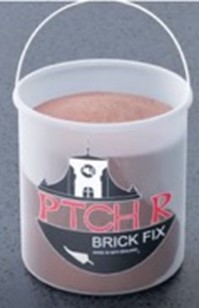
Special Brick Repair Mix Price:17 NZD/kg
A unique technology for preserving cultural heritage
Our company introduces a groundbreaking solution for the restoration of historical buildings through the innovative, cost-effective, and environmentally friendly PTCHR process. We specialize in undetectable repairs of damaged historical brick structures, restoring their structural integrity while maintaining their original appearance and character.
Our History and Experience
The licensed construction company was founded in the Czech Republic in 1991. Since 2014, we have exclusively focused on the repair and restoration of historical buildings, during which we developed and refined the revolutionary PTCHR process. For more than 10 years, we have been carrying out comprehensive repairs of historical buildings in Europe, and now we are bringing our expertise to New Zealand.
What is the PTCHR Process?
PTCHR is an acronym for “Peace to Churches,” which expresses the core philosophy of our work: restoring peace of mind through effective, invisible, and quiet repairs of buildings without disturbing the surrounding environment.
Our goal is to enable the repair of brick facades on historical buildings without the disturbance of noise or dust. Thanks to our special mix, brick structures can be repaired without the need for demolition or replacement with new materials.
Special Brick Repair Mix
Our proprietary mix offers a perfectly colour-matched solution that can be applied as a strong bond to damaged historical bricks. The mix is made from recycled materials and offers the following benefits:
Key Product Features
- Authentic Material
- Duplicates the same properties as the repaired surface
Construction waste crushed by specialized machines into various grades of fineness
- Perfect Adhesion
- Perfect connection with the original historical bricks
- No edges or cracks formed
- Ensures long-term stability of the structure
- Indistinguishable Result
- Surface scanning with specialized equipment and proprietary software
- Analysis to create perfect colour and structural matching
- The result is indistinguishable from the original historical brick
- Duplication of Authentic Texture
- Use of special tape with a soft, fast-hardening material
- Creation of an authentic impression of the original surface
- Roller application for a flawless surface appearance
Environmental Responsibility
90% Recycled Materials
This approach addresses the global problem of construction waste disposal in an environmentally friendly manner while protecting cultural heritage.
Cultural Heritage Protection
Demolishing old bricks and replacing them with new ones is considered unacceptable not only from an ecological perspective but also in terms of protecting cultural heritage. Our mix:
- Protects all original historical bricks
- Preserves even small fragments of original materials
- Creates missing parts with the same properties as fired bricks
- It uses the latest advancements in polymers and a special eco-friendly polymer construction adhesive
A Revolution in Restoration
Before the PTCHR Process:
- Restoration was a highly craft-based activity
- Required the most experienced and skilled craftsmen
- Commercial use was not possible
- Lack of specialists led to expensive and slow processes
- Many buildings were demolished instead of renovated
With the PTCHR Process:
- Simple to use without special skills
- Sophisticated software handles complex tasks
- Available even to individuals without prior experience
- Cost-effective restoration of historical buildings
- Preservation of cultural heritage for future generations
Why New Zealand?
Manufacturing in New Zealand strengthens our brand due to the clean and green image of the country, which perfectly aligns with the principles of sustainable construction in the PTCHR process. The combination of our European experience with New Zealand’s environmental approach creates the ideal conditions for the development of this technology.
Our Philosophy
“We love old buildings, nature, peace, and clean air, and our special mixes serve to preserve these four principles.”
We believe that by combining traditional values with modern technologies, we can:
- Preserve cultural heritage
- Protect the environment
- Provide cost-effective solutions
- Maintain the charm and beauty of historical buildings
The Future of Restoration
Our mission is to democratize the restoration of historical buildings and make it accessible to a wider range of users. Thanks to the PTCHR process, it is no longer necessary to demolish entire walls of historical buildings just because of a few damaged bricks. New bricks simply lack the strength and traditional charm of the original.
Contact us and discover how the PTCHR process can save your historical building while respecting the environment and cultural heritage.
Cold Production of Geopolymer Concrete from Construction Waste
Project Objective
Our aim is to produce an environmentally friendly construction material from recycled construction waste, without using conventional cement and without the need for firing or heating.
Production Process
We mix a finely ground precursor (made from construction waste) with alkaline activators. A chemical reaction creates a new binder that gradually hardens at normal room temperature.
This process is called alkali activation, and the resulting material belongs to the category of geopolymer or alkali-activated construction materials produced without external heating.
Planned Products
The material is ideally suited for producing concrete slabs and paving blocks for hardstand areas, such as car parks, footpaths and driveways.
Expected Benefits
- Recycling construction waste instead of sending it to landfill.
- Producing construction materials without conventional Portland cement.
- Manufacturing without energy-intensive firing processes.
- Potential to achieve high compressive strength.
- Using locally available waste materials.
- Potential to reduce production costs and environmental impact.
Project Goals
Our experiments will focus on identifying the most suitable mix design and evaluating its strength, durability and economic viability under New Zealand conditions.